
How to Spot Roof Damage
from the Ground in Idaho Falls
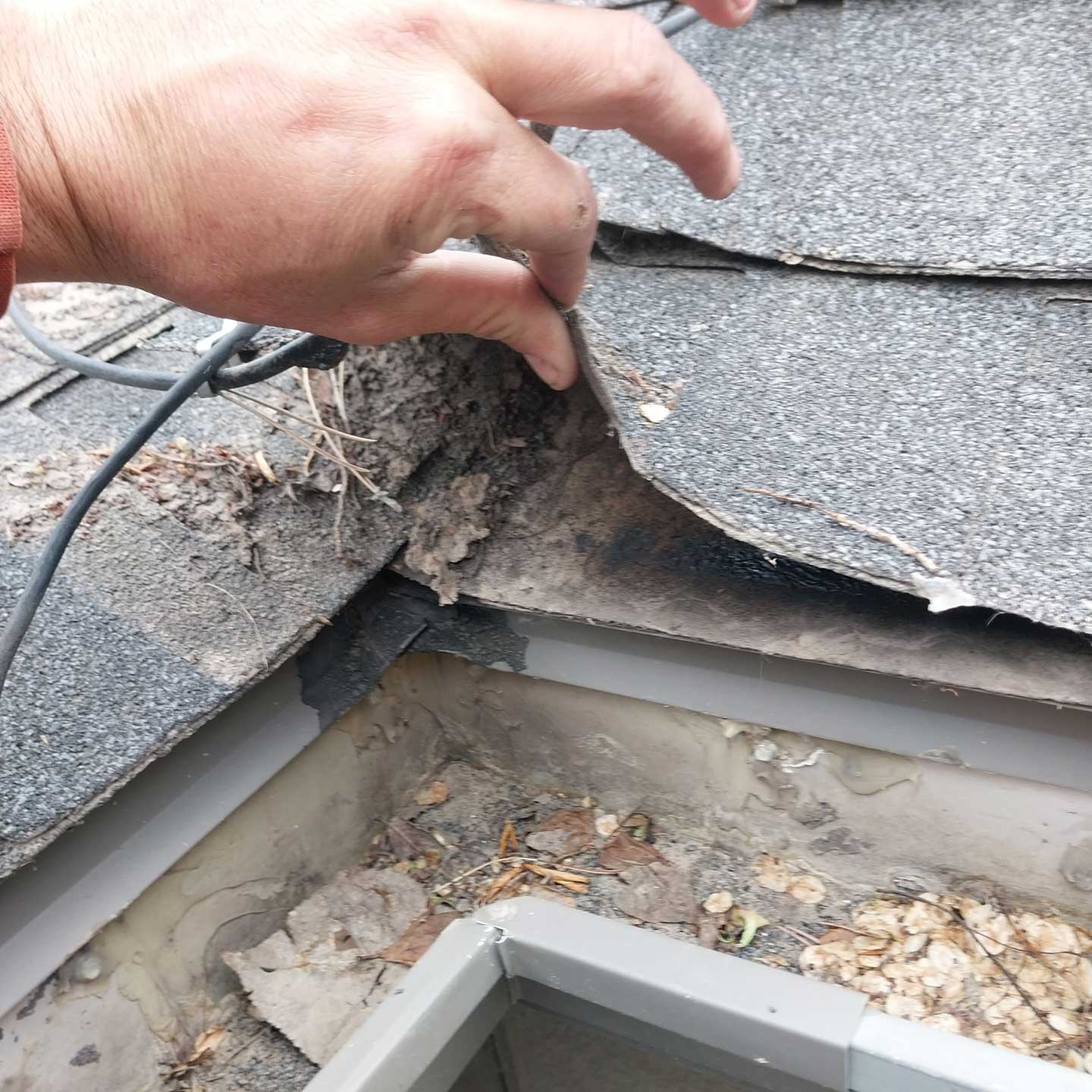
You do not need to get on your roof to know something is wrong with it. In fact, you should not. Climbing a roof is dangerous, and in Idaho Falls it is downright risky once frost or snow shows up. The good news is that most of the common warning signs are visible from the ground or from inside your home. A few minutes of looking, a couple of times a year, can catch a small problem before it becomes a big one. Here is what to look for.
Start at the curb and look at the shingles
Walk across the street and look at your roof as a whole. The shingles should lie flat, even, and uniform in color. Watch for shingles that are curled at the corners, cracked, buckled, or simply missing. After an Idaho wind storm, edges and ridges are the first places shingles lift. Dark or discolored patches can mean the protective granules have worn away. Anything that breaks up the smooth, even look of the roof is worth a closer look.
Check the roofline and ridge
The ridge of your roof, the line along the very top, should be straight. Sight along it. Any sag, dip, or wave can point to a problem with the decking or the structure underneath, sometimes from moisture and sometimes from years of heavy snow load. A sagging roofline is one of the more serious things on this list and is worth a professional opinion sooner rather than later.
Look at the gutters and the ground beneath them
Your gutters tell you a lot. Granules from asphalt shingles collect there as a roof ages, and they look like coarse black sand. Check the ground under your downspouts too. Gutters that are pulling away from the house, sagging, or full of debris cannot move water away from your roof and foundation, and in winter that sets up ice dams. While you are at it, note any gutters that held heavy ice last winter.
Scan the flashing and the roof penetrations
Flashing is the metal that seals the spots where your roof meets something else: chimneys, vents, skylights, and pipes. From the ground or an upstairs window, look for flashing that is lifted, rusted, or visibly loose. These transitions are the most common place for leaks to start, because they take the most abuse from freeze and thaw.
Look at the eaves and overhangs
The edge of your roof works hard in an Idaho winter. Look for stained, peeling, or rotted wood along the eaves and soffits. In winter, a thick band of ice along the edge, or a row of heavy icicles, is a sign of an ice dam and of warm air escaping into your attic. These are clues that the roof needs attention even if the shingles themselves look fine.
Do not forget to look inside
Some of the clearest signs are indoors. Check your ceilings and the tops of walls for brown or yellow stains. Then go up into the attic with a flashlight on a bright day. Look for daylight coming through the roof boards, dark water staining on the underside of the deck, damp or matted insulation, and any musty smell. The attic often shows a problem long before it reaches your living room.
When to call a professional
If you spot one minor thing, make a note and keep an eye on it. If you spot several signs, or anything on the more serious end like a sagging ridge or attic daylight, it is time for a professional inspection. A trained inspector can safely get up close, see what you cannot from the ground, and tell you honestly whether you are looking at a small repair or something bigger. Catching it early is almost always the cheaper path.
How often should I check my roof from the ground?
Twice a year is a good habit, ideally in the fall before winter and in the spring after the snow is gone. It is also smart to take a look after any major wind or hail storm.